
Bio
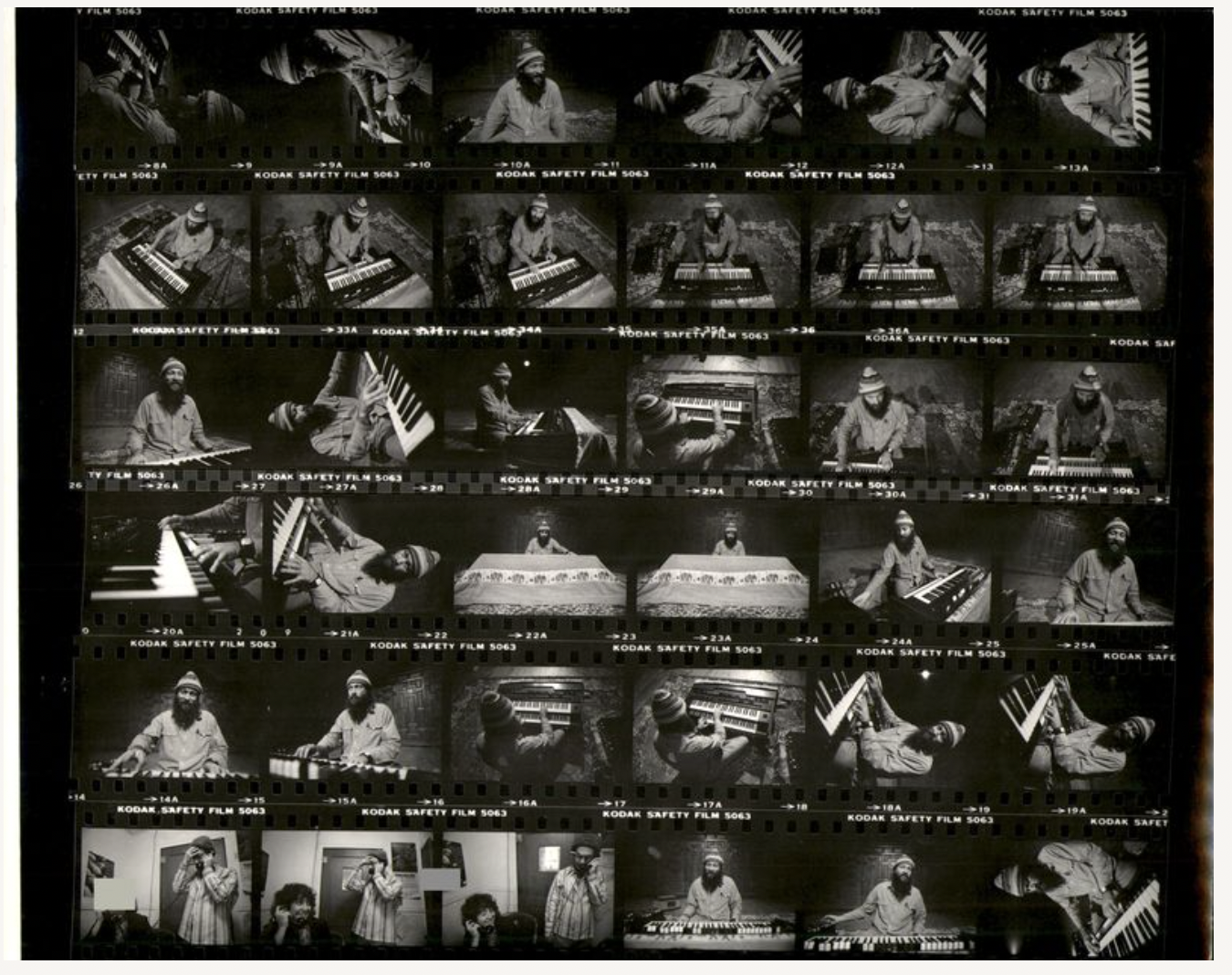
Terry Riley launched the movement now known as Minimalism with his revolutionary composition In C in 1964. This seminal work provided a new concept in musical form based on interlocking repetitive patterns and went on to change the course of music in the 20th century. In a career now spanning eight decades, his influence is felt in nearly every corner of the world of music.
Born in Colfax, California, in 1935, Riley studied piano from an early age. He moved to San Francisco in the mid-1950s to study at SF State College and UC Berkeley, forming collaborations and lifelong friendships with the composer La Monte Young and choreographer Anna Halprin among many others. Riley moved to Paris in 1962, earning a living playing in jazz clubs while participating in Fluxus concerts and happenings in Germany, France, and Denmark. Expanding on his groundbreaking discovery of creating music with tape loops, Riley composed the score for Ken Dewey’s play “The Gift” featuring members of the Living Theater and Halprin’s Dancers Workshop, which caused a sensation at the Paris premiere in July 1963.
His composition In C was written shortly after returning to California in 1964 and premiered at the San Francisco Tape Music Center that November. Its impact was immediate. Performers and audience alike recognized they’d unlocked an unusual euphoria, which the classical music critic for the San Francisco Chronicle struggled to capture in words in his ecstatic review: “At times you feel you have never done anything all your life long but listen to this music and as if that is all there is or ever will be, but it is altogether absorbing, exciting and moving, too.” The search for ecstasy through repetition would become a hallmark of music in the second half of the 20th century.
Riley moved to New York City in 1965 where he elaborated on these ideas in solo performances with such seminal works as Keyboard Studies, Reed Streams, Poppy Nogood and the Phantom Band, and A Rainbow in Curved Air. He toured versions of these works in Intermedia ’68, a two-month traveling festival alongside Allan Kaprow, Dick Higgins, USCO, Trisha Brown, and others. With the release of In C in 1968 on Columbia Records, Riley introduced a global audience to what would soon become known as Minimalism in music.
In 1970, Riley became a disciple of the revered North Indian raga vocalist Pandit Pran Nath and made the first of his many trips to India to study at the source. He performed frequently in concert accompanying the legendary singer on tampura, tabla, and vocal accompaniment over the next 26 years until Pran Nath’s passing in 1996. Riley continued to develop his own music all the while, devoting much of the 1970s to solo concerts on the electric organ, further elaborating on his technique of improvising interlocking patterns to hypnotic effect.
While teaching at Mills College in the 1970s, he met David Harrington and began a long association with the Kronos Quartet that has produced over two dozen string quartets, prompting a Carnegie Hall program note that, with the exception of his student era work,
“all of Terry Riley’s music involving string quartet was created for and premiered by the Kronos Quartet, making this perhaps the most fruitful relationship in history between a composer and an ensemble.”
Riley’s works list includes chamber music, works for large orchestra, small ensembles of unusual forces, choirs, a chamber opera, sound installations, scores for film and theater, solo pieces for various instruments as well as countless compositions for piano. Organizations that have commissioned his music include the Salzburg Festival, Carnegie Hall, the Serge Koussevitzky Music Foundation in the Library of Congress, NASA, and the Los Angeles Philharmonic, whose organ in Disney Hall Riley christened “Hurricane Mama.”
Since 2019, Riley has lived in Japan where he continues to perform regularly and compose for soloists and ensembles. In 2020 he was elected to the American Academy of Arts and Letters, and in 2022 the landmark Columbia recording of In C was entered into the National Recording Registry of the Library of Congress.
Riley’s impact has changed the course of music, and his influence is clearly heard in the works of prominent composers including Steve Reich, Philip Glass and John Adams. His influence on rock groups such as The Who, Soft Machine, and Tangerine Dream is widely acknowledged, and his hypnotic, multi-layered, polymetric, brightly orchestrated eastern flavored improvisations and compositions set the stage for the prevailing interest in a new tonality. Riley was listed in the London Sunday Times as "one of the 1000 makers of the 20th Century."